

overthinking.
the unfiltered inner monologue about failing at motherhood you did not ask for, but it does pick up a bit in the end.

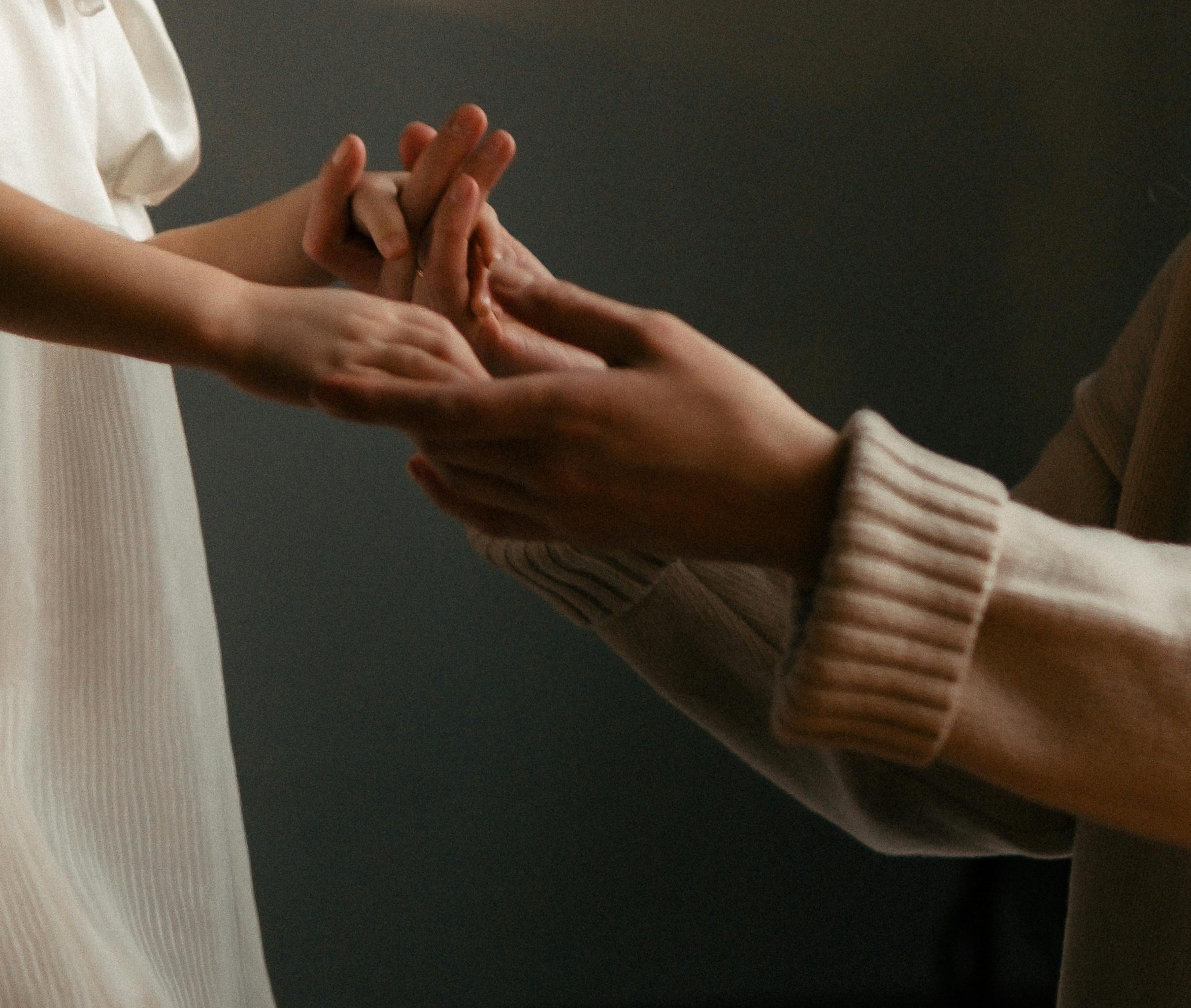
It’s just a flick. A tap. Truly, it’s hardly a smack. It doesn’t really hurt her.
But still.
She’s looking at me in disbelief. Pink, salty disbelief, watery and shiny.
For the second time today, I get really close to deliberately almost hurting her.
For the second time today, she sees me really lose it.
The first time was earlier this morning when, while in the midst of trying to get on top of the house —house? the two multi-purpose rooms where we all sleep, live, work and play in at any given hour of the day?— I caught her intentionally and repeatedly opening and closing the door against her baby sister’s head. She would have gotten away with it — her sister is a rather sturdy, merry-go-lucky type of playmate. Tchack tchak tchak go her pudgy little hands on the floor as she trudges along, bashing and ramming through anything standing in her way with the otherworldly serenity of a freight train. Oh, she would have gotten away with it, if only the baby’s fingers hadn’t ended up stuck between door and floor in the process! Now that she was not going to let pass, no sir!
It all happens in less than thirty seconds and it can be distinctly illustrated in sounds.
The shriek — from the victim’s part.
The wail — from the perpetrator’s side, who now knows she’s in trouble.
The clang — from the two (two.) airers that I have to rail out of the way to get to the scene of the crime, with the result of one swooning dramatically onto the floor (diva).
The roar — which comes, I find, from my very own and now very distressed dear self.
The whisk — from the kitchen towel that I whip gracelessly in the direction of my eldest daughter to shoo her out of the way as I rescue the still squealing baby.
The slam — from the door I kick shut in a surge of diverted rage, with a crying small baby hollering like a war horn in my arms and a crying bigger baby staring tearfully and bawling from a few steps away.
The bleep-bleep-bleep — not of the censored swearwords (because in that sense, at least, I still manage to contain myself) but from the fridge’s door. Still half-loaded with groceries — the rest of the bags still scattered on the floor, can you see the slo-mo rolling apple making its way under the table?— and left open in the heat of the action, it’s now announcing that it won’t be able to keep cool for much longer and it will soon shut down. Well, that makes two of us, honey.
I believe a brief digression on the aforementioned house issue would now be fitting as to provide some mitigating context (pitiful excuses, if you like) to the circumstances just related.
So, we are renovating the farmhouse. Oh, how splendid! With us still living in it. Aaah. For months now we — two adults, a toddler, and a baby — have been living elbow-to-elbow from two of the upstairs rooms: a kitchen that doubles as just about anything other than a bathroom (in most cases) and a bedroom, currently housing a double bed, two cots, two wardrobes, two bedside tables, three chests of drawers and three derelict house-plants, all slotted in like a 3D game of Tetris. We do have a bathroom — oh yes, heavens, imagine that. Chaos is therefore the order of the day every day — toddler chaos, baby chaos, laundry chaos, storage chaos, work-from-home chaos, kitchen chaos, renovation chaos, universal comic chaos. All of it. If you can think of it, we probably have it.
Although I must admit, life is much easier now that we are no longer managing a full-blown country mice invasion. Two and a half months, twenty-seven (read that again) humane captures — no mouse was harmed in this process, each one was released in the surrounding fields—, one broken oven (“Why every time I bake a cake the whole kitchen smells like….warm, happy, cosy mouse?” — one word: nest. Yeah, let this one sink in.) and one broken dishwasher (same, but without the nice-and-toasty mouse smell) later, life is a little easier because I don’t have to aggressively vacuum the whole place down five times a day, routinely check the tunnel traps, keep the baby away from the tunnel traps, reassure the toddler that the tunnel traps do not hurt the mice, wash out the tunnel traps, refill the tunnel traps (nougat chocolate and honey works a charm), re-position the tunnel traps and thoroughly wipe down every surface that may smell of one of the following: food, paper, human, natural fibres, wood, dust, plastic. Honestly, now that I look back, life is a breeze now.
Then why do I explosively, catastrophically, too-late-for-turning-back, contain-yourself-for-mercy’s-sake-woman L O S E I T (!) when, later that day, I catch the same three-year-old daughter scribbling the sofa with a pencil? I mean, it’s literally a cheap-job of a sofa. It matters less than zero in the big scheme of things. And in the medium-scheme of things. And frankly even in the petty scheme of things. Really, it’s not about the bloody sofa. Screw the sofa.
And yet, my blood is boiling. Suddenly I’m yelling again, loud and shrill and tearful and scary and pathetic. With an ungracious swipe of my left arm I hurl my child off said sofa and away from me, while my right hand grips shakily at my temples as I sink onto my knees. My girl is devasted and terrified. The baby has stopped in her tracks and now sits on the floor, bellowing her outrage at full volume.
Look at me, a mother — a mother— unable to contain herself in the face of a minor domestic blunder. Breaking apart violently —visciously! that was viscious, you monster! — in front of her children over some stupid, irrelevant, ridiculous pencil marks on the stupid, irrelevant, ridiculous cheap sofa. Where did all the gentle parenting go? The choose-love-always, the get-curious-not-crazy, the how-can-I-be-there-for-my-child-today, the what-unmet-need-does-her-behaviour-inform-me-of? They disintegrated (evidently) when I imploded.
It’s a good thing that the girls’ father is far away on a work trip when this happens. I can hear his calm voice —how does he manage to stay so fastidiously, so unfailingly, so offensively self-possessed? —, I can hear the exact words he would use in his attempt at diffusing the situation. “Darling, b r e a t h e . I understand it is upsetting, I really do. But remember, she’s just a three-year-old…”.
Thank you very much, Dalai Lame-a. No, honestly. Thank you for reminding me how not-old she is. How innocent and tender is the flesh I just metaphorically scarred with my voice, my words, perhaps even my hands! How monstrous and toxic and emotionally underdeveloped I must be for losing it so barbarically with her. Thank you for pouring gasoline all over my raging wildfire! I was physically drowning from the inside in guilt and shame, but at least now I can go out with a bang — supernova style, like the all-star mother I evidently am. Where is my spotlight because here I go!
I read somewhere (did I just type “why do I get kore upset wuth my children then their fathr”?) that mothers are more prone to be the ones “enforcing” (shiver) “discipline” (shiver again) compared to fathers because while they do see that she-is-just-a-three-year-old, they also see their children as the adults of tomorrow, the future citizen of the world.
Also, mothers seemingly tend to identify with their children’s behaviour more closely than fathers do (aaaah, you see? it all figures…) — from the moment we are (re)born as mothers, our role apparently becomes a central part of our identity and our sense of purpose in life (there now, who would have said?!). When our children misbehave we feel like we failed. We failed because we must have done something wrong, it must be solely and entirely our fault because we are the main point of reference for our children. It’s on us — we have failed to do the inner work, to heal our wounds, to take responsibility for ourselves before we chose to take responsibility for someone else. We are the custodians and the nurturers of our children’s souls, or at least we were supposed to be, and we. have. failed.
We have failed them,
we have failed ourselves,
we have failed our ancestors,
we have failed the future generations,
we have failed the whole wide world.
So much failure in barely 50kgs of miserable bones and sore guts.
Fail, fail, fail, fail.
And then there is the fact, I suspect, that often mothers’ needs are the last to be met. I know my needs weren’t met today. They haven’t been met for a while. Up to a point, I think it’s part of the job description, but then again I was always an overachiever. Maybe today it all got a bit too much. Today I’m pretty ugly tired.
Perhaps there is also the painful realization that my child isn’t perfect — that my salted caramel little girl, all sugar and spice and everything nice, actually is only human. Imperfect, flawed, tender, frequently irrational, occasionally feisty, and ever so easily hurt. Like me.
Oh my.
She is the mirror.
The innocent mirror of my ugly tired self.
If a baby doesn’t sleep through the night, we don’t blame ourselves so hard, right? Unless you are me — in that case, you start questioning whether you have unintentionally messed up her burgeoning circadian rhythms (how could you be so careless?) and then proceed with researching melatonin-boosting natural remedies, reviewing her entire bedtime routine, picking it apart to identify any potential mistakes, and then proceed to replacing all the light bulbs in the bedroom to ensure the light is soft, warm and diffused — you know, like a sunset. All while beating yourself up. Because everything must be somehow your fault/responsibility/job to fix.
But it gets worse.
Babies are kind of excusable because, you know, babies…right?
But toddlers! If a toddler misbehaves, well now Janet, that’s like exposing all the dirt we’ve been sweeping under the carpet of our lives sending ferrety glances behind our shoulder. That’s like grave-digging, but instead of corpses, it’s unearthing ancient rancid wounds.
Because if a toddler refuses to listen to you, it’s because you are not worth listening to.
Because if a toddler turns down a cuddle, it’s because you were unable to break the generational pattern and foster a strong and healthy attachment style.
Because if a toddler throws a tantrum in public, it’s because you were not able to model healthy emotional self-regulation.
Because if a toddler ______________, it’s because you _______________.
Because, ultimately, you are a failure.
So here I am, still kneeling by the sofa, staring at nothing in particular, waiting for the spiteful silent monologue racing within my angry little person to trail off, or at least pipe down a notch. My little girl is sitting on the floor a few steps away. She’s catching her sister’s eye in the plastic mirror nailed at knee-height onto the wall. Her sister finally sees her reflection pulling faces at her and gasps, delighted. They’re both giggling now.
It would seem I have not permanently scarred her. Yet.
Or maybe she’s just dissociating through play…? How does one tell?
Please stop it. This is getting macabre and pathological now. Get a grip. Time to put the dinner on.
Throughout dinner, I maintain a cool and uncharacteristic silence. I carry out my tasks, remain quiet, and observe. Without being prompted, she offers me her hands to wash, sits down in her chair, and starts eating her dinner. Instead of the usual repertoire of theatrical bleah, ughs and ewws, she even says — mmh, yummy. I pin my facial muscles into place trying to stifle a smile. It’s a home-made winter BBRR soup (Beans, Barley and Rrrrroot vegetables), a brownish sort of job that would generally require an in-depth list of nutritional evidence illustrating why it’s good for you and at least an extra twenty-to-twentyfive minutes added to the overall dinner time to thoroughly decant each spoonful in her mouth to ensure I understand that “It’s not her favourite”.
Since she started with her three days of daycare last year, her eating habits — once my crowning child-rearing achievement — have painfully degenerated and for that, I am sorry to say, I entirely blame other mothers. I was doing just fine. In fact I was doing brilliantly. And anyway I have enough guilt on my shoulders already. So there you go. Or maybe it is my fault for not equipping her to stand strong and confident against peer pressure, to think with her own head and always be questioning rather than being swayed by other people’s opinions and behaviours. F…udge.
I am still silent (from the outside, at least). I put her baby sister to bed and lay her bedtime kit on the sofa, ready for our usual routine — her whining that she needs help because she can’t do it (lie), her putting things on the wrong way (deliberate idiocy, although the commitment to her agenda is praiseworthy), her pretending to be stuck (an act), her freaking out because she actually gets herself stuck (close eyes and take deep breaths) — only to witness her fully undress herself, head to the bathroom to pee, wipe, then come back to dress herself up, realize she got her layers on wrong, undress, and redress herself up in the right order.
She looks at me. Without a comment, I head to the bathroom and leave out her toothbrush with toothpaste already on it — she brushes dutifully as never before. She even does the vowels chanting we usually do together (for thorough brushing, you know, to reach all the spots) by herself — Aaaaah, Eeeeeh, Iiiih, Oooooh, Uuuuuhhhmmmmmmmm. In Italian vowels sound different, so the trick works quite well for us. The Oh and the Uh are actually useless for tooth-brushing purposes, but it’s a nice transition for closing the mouth and getting to the mmmh stage at the end, which is wonderfully calming for the nervous system (professional deformation, I’m a yoga teacher). So there she is, going through the whole chanting routine — self-led and determined. When she’s done, she even stands on her tippy-toes, stretching out to reach for the pot where the toothbrush family lives.
She’s back and now she’s looking at me again, expectantly. Since my meltdown (weren’t the toddlers the ones supposed to have the meltdowns?), she’s been following me around all evening, fidgety and jittery, with a look on her sweet pixie face that is somewhere between uncertain, insecure, guilty, confused and sad. At some point, during the dinner, she even got up to hug her baby sister on the high chair.
I don’t know what has unsettled her more — my current unnaturally silent and collected demeanor or my explosive anger show. I feel it must have been the silence. Call it clichè, but I’m Italian — perhaps Mediterranean blood is hotter and more liquid, I don’t know, but it is stereotypically quick to rise to the surface. Usually, however, it doesn’t mean much: a heated tone, animated gesturing, colorful expressions, even the overly-dramatic slam of a door/drawer are common features of a domestic conversation in a sunny-kingdom household —Bang. Bash. Slam. It’s all part of the folklore. She knows by now. Although, admittedly, today things got a little too sunny. Actual surface of the sun kinda sunny.
She climbs up the sofa and inspects the pencil marks on the cushions. I sit down on the rug and look up at her.
“Is there anything you’d like to say?”
”Sorry.”
“I’m sorry too.”
“You hurt me and made me fall.”
“Yes, I did. I shouldn’t have done that, even if I was angry. I’m sorry.”
“Yes, you shouldn’t have done that.”
“What did you do that you shouldn’t have done?”
“I drew on the sofa.”
“Yes, you did.”
“You didn’t give me any paper.”
“Did you ask me for paper?”
“No.”
“Mmmmmh.” — I nod.
“Will you give me paper tomorrow?”
“Yes, darling. You ask me using your words and I’ll give you some paper.”
She nods.
“Mama gets upset when you don’t cooperate. When you don’t listen to me, I feel invisible.”
She nods again.
We are quiet for a while.
I tap my thighs with my hands, inviting her in for a cuddle.
She nestles in and then rests her head against my heart for a while. Then she looks up, cups a tiny hand around my face, and with a reassuring smile she asks —“What does your heart say?”.
And right there, among the battlefield of failures, I see in her all the best of me too. When I think I have messed up for good this time, she says or does the one thing that I thought had floated past her and vanished without notice.
I see myself cupping my hand around her tiny face and asking her “What does your heart say?”, with a reassuring smile.
I see my attempts at explaining to her why the words “I’m sorry” are good for those who hear them but also for those who are brave enough to speak them.
I see all the work I weave into every (functional) interaction between us to get her acquainted with the big heavy feelings underpinning anger — shame, guilt, fear…
I see the deep breaths we take together to de-escalate tricky situations, counting them on her pink little fingers.
I see my unceasing efforts to break the cycle of deep-engrained generational patterns I have sworn will end with me.
I may not see every single time I have somehow done this mothering thing right. Unlike the bad memories, the good ones seem to fade away so easily. But I do see that I must have done at least something right, despite what my own unhealed wounds and still-festering stories may try to wind me up into believing in a moment of despair.
Because there she’s been all along, quietly taking it in. Paying attention to some of it. Seemingly ignoring the majority of it. And yet clearly, unexpectedly, heart-swellingly saving what matters to bring it out
just
at the right
time.
“My heart is serene, baby, thank you. I feel better now.”
“I feel better too.
Can we read the book about gardening and cauliflowers now, mama?”
I want to thank the beautiful soul that is Lauren Barber, whose words in “All the reasons I am not a ‘good’ mother” (linked below), found me exactly when I needed them the most and, as is usually the case with her, got straight to my tender heart. If any of my words today somehow resonated with you, I warmly recommend you read her piece. You will find the vulnerability, the comfort and the courage you need.

And without reading through one more time, I just press “send” and let my failures, my flaws and my fears land in your inbox, with the hope that they may help you remember (or realize) that you are human, you are allowed to mess up, you are perfectly capable of making things right again, and that you are doing better than you think, mama.
With all my love,
Julia
I see you, I’ve been there, we with both probably be there again, and it’s okay. Those little mirrors have so much to show us, you are doing a great job, even when you don’t feel like it.
Oh. I don't have eloquent enough ways to say: I see you. This is so so so so hard (even without the country mice invasion and re-modeling and husband away). You are doing your best.
Sometimes I think allowing our babies to see us as mere humans and not the perfect mothers we wish to be, is itself a gift. Because they can only ever be mere humans, too. Humans with tempers and unmet needs and soft, tender hearts. 💗